
Winter in Lapland: Snow, Skiing and Nature
A winter in Lapland means more than snow—it brings a noticeable change in the light: the dark season gives way to long, bright days on the slopes. Among forests, fells and small towns, you’ll find a range of bases for family outings, cross-country skiing, downhill runs and guided experiences. The right base depends on whether you want to spend most of your time on the slopes, in peaceful nature or on organised tours—and how much time you’re willing to allow for transfers.
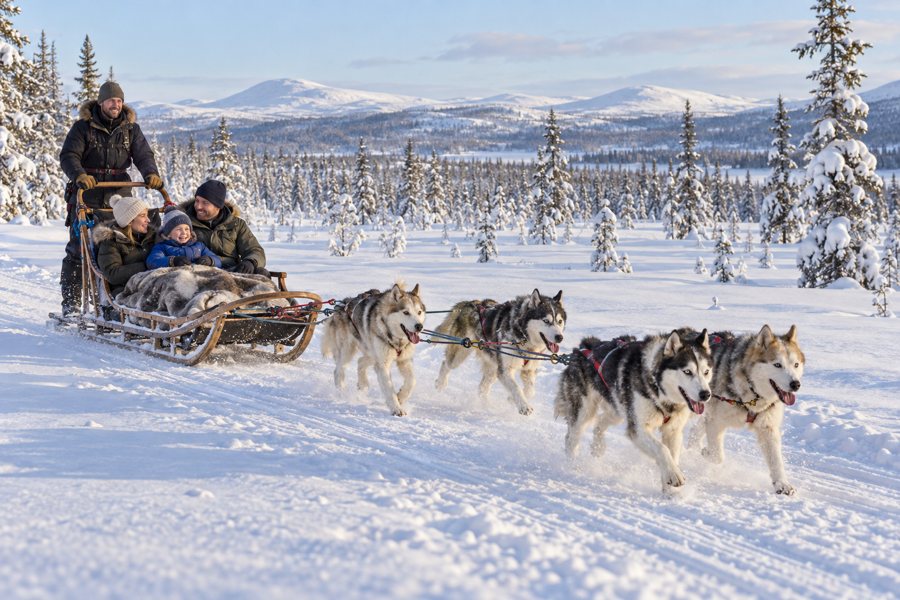 Familie fährt mit einem geführten Hundeschlitten durch eine verschneite Lichtung in Lappland.
Photo: OpenAI image generation via Codex
Lapland in winter: five useful facts
- The first snow can fall in Lapland as early as September; a lasting snow cover arrives later, depending on the place and the year.
- In the north, snow often remains from late autumn into spring, although the season varies from year to year.
- February and March often combine good snow conditions with rapidly increasing daylight.
- Levi, Ylläs, Saariselkä and Ruka each offer a different mix of downhill slopes, cross-country skiing, activities and village life.
- The Northern Lights may be visible during the dark season, but neither the weather nor a sighting can be guaranteed.
Which destination suits your winter trip?
Skiers can compare the ski resorts in Finland by their slopes, cross-country trails and size. Levi has a lively centre and downhill runs for a range of abilities. Ylläs links two villages and offers an extensive network of slopes and cross-country trails. Saariselkä lies in an open Arctic landscape and suits travellers who want to combine downhill skiing with winter trails and nature. Ruka, near Kuusamo farther to the southeast, pairs winter sports with a landscape of forests and lakes. The season, weather and opening hours all affect what is actually open during your travel dates.
Rovaniemi is a better fit for a trip that combines a town stay with excursions. You can arrange experiences from there, while staying right at a ski resort puts slopes and trails within easy reach. An outing such as a winter safari in Finland can add variety to a rest day or fill half a day of your holiday. If you’re looking for peaceful nature, consider visiting the national parks in Finnish Lapland. Protected areas have marked trails and their own rules; snowmobile tours must stick to permitted routes and stay out of sensitive natural areas.
A city break in Rovaniemi is different from a remote place to stay on a fell. In a larger town, restaurants and services are close together; a cabin in a quiet setting offers more seclusion but may mean extra driving. Choose based on your plans for the day, not just the view from your accommodation.
Snow and daylight by season
In December and January, days in the north are short, and long twilight hours shape the rhythm of the day. The atmosphere is special, but if you’re planning several activities, remember to allow for limited daylight and transfers. Days grow considerably longer from February onwards. Snow remains on the ground in many northern regions in March, while the extra daylight makes it possible to spend longer outdoors. These are typical patterns; snow conditions and temperatures vary from year to year.
The climate in Finland varies from south to north. Lapland is often snow-covered for longer than coastal regions. Across the north, wooded valleys, open fell terrain and river landscapes offer different settings. The nature of Finland therefore offers more than one kind of winter scenery: wind, cloud cover and terrain all make a difference when choosing between a short trail, a longer outing or a day in town.
The Northern Lights can make a holiday special, but clear nights can’t be ordered. Darkness is essential, and cloud cover can prevent you from seeing them. Choose a travel period when you’ll also enjoy ski days, winter trails and visits to local towns. February and March bring more daylight, while the nights are still dark enough for a possible sighting.
Getting there and getting around
Rovaniemi and Kittilä are gateways to different holiday destinations; depending on where you’re staying, you’ll need to travel farther from there. In winter, road conditions, daylight and connections all affect the actual journey time. The guide to transport in Finland outlines the different options. Public transport connects larger towns, but doesn’t reach every remote cabin or activity starting point.
A rental car offers more freedom if you’re staying somewhere remote or planning to visit different places each day. Driving in winter calls for care in the dark, snow and possible icy conditions. If you’re not used to winter roads, you may feel more comfortable making fewer stops or booking transfers. Staying in the centre of the area where you plan to spend your time cuts down on travel and makes spontaneous breaks easier.
Planning your accommodation and daily schedule
Hotels and apartments in town are often closer to rental shops, stores and restaurants. A cabin outside the centre offers more peace and quiet, but you may need a car or a reliable transfer. Before booking, check how far it is to the nearest cross-country trail or ski slope, and what transport is actually available. In winter, short distances on a map can feel different when there’s snow on the ground or little daylight.
Spread your highlights over several days. Getting dressed, hiring equipment, travelling to the starting point and taking breaks all take time. For families, one main activity a day is often better than a tightly packed schedule. Depending on the weather, you can add a shorter cross-country ski, sledging or a visit to town. Warm-up breaks and dry gloves make a practical difference.
Frequently asked questions about winter holidays in Lapland
When is snow most likely?
In the north, snow often remains from late autumn into spring. The exact period depends on the year and the location. For ski days, the middle of winter through March is usually the most obvious time to visit.
Is December suitable for children?
It can be a good choice if you allow for the short days and cold weather. Shorter guided experiences, suitable clothing and planned warm-up breaks help keep the day manageable for children.
Should I stay in Rovaniemi or right at a ski resort?
Rovaniemi combines city amenities with excursions; staying at a ski resort saves time getting to the slopes and trails. Choose based on whether you’re more interested in town life and a range of tours or in winter sports every day.
Can I count on seeing the Northern Lights?
No. Dark nights offer a chance, but cloud cover and changing aurora activity are unpredictable. A good winter holiday should still be enjoyable even without a Northern Lights sighting.
