
Climate in Finland
Finland's weather varies with the season and with location. Coastal areas, inland lake districts and northern Lapland can feel quite different on the same day, so there is no single “Finland temperature” that works for every itinerary. For a comfortable trip, choose clothing for changeable conditions, check a local forecast shortly before travel and allow outdoor plans to adapt if wind, rain or snow changes.
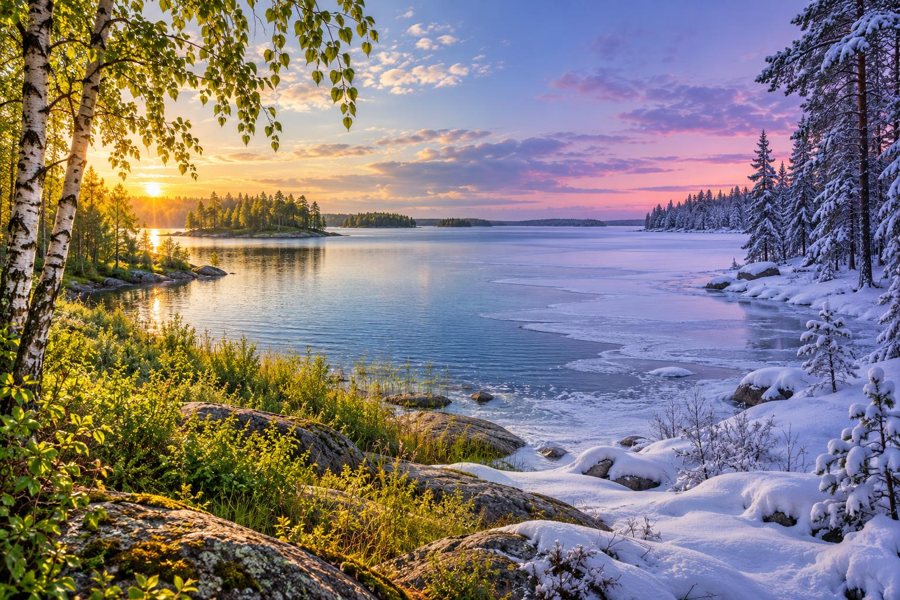 Symbolic illustration related to Climate in Finland; not a documentary view of a specific place.
Photo: AI-generated illustration (OpenAI)
Symbolic illustration related to Climate in Finland; not a documentary view of a specific place.
Photo: AI-generated illustration (OpenAI)
Coast, inland and north
The sea moderates conditions along the coast: spring can feel slow to warm, while autumn often stays milder than inland. Farther from the coast, temperatures and conditions may change more sharply. In Lapland, winter is longer and daylight varies strongly through the year; in summer, long bright evenings make outdoor time feel extended. The exact experience depends on where and when you travel. The broader geography of Finland helps place these regions in a route.
For a northern stay, use the destination guide to Rovaniemi as a starting point, then check local conditions for the places you will actually visit. A trip to a city centre, a forest trail and an exposed lakeshore may call for different layers even within one region.
What to pack and how to plan
In warmer months, pack light layers, a rainproof outer layer and footwear suitable for wet paths. Near water, a breeze can make a warm afternoon feel cooler. In winter, insulation, gloves, a hat and footwear with grip are practical basics; choose equipment to match your activities rather than assuming that a city outfit will suit a long outdoor excursion. Check the forecast and any trail or transport notices before setting out.
When comparing outdoor plans, read about Finland's natural landscapes and the areas covered by national parks. In winter, the guide to skiing in Finland can help you distinguish a snow-focused trip from a city break. Conditions and services vary locally, so confirm what is open for your dates.
Seasonal daylight
Day length changes dramatically between southern Finland and the far north. Around midsummer, evenings are very light, especially in Lapland; in winter, daylight hours are short. This affects when a walk feels comfortable and how much you can fit into a day. Build in breaks, carry a light when walking in dim conditions, and avoid relying on old sunrise or sunset times.
Weather may also affect connections, especially on longer journeys. Check current departures and allow a margin when transferring between modes; the overview of transport in Finland is useful for comparing options. A good rule is to plan one main outdoor activity each day and keep a nearby alternative for wet or windy weather.
