
The geography of Finland
Finland lies in northern Europe between Sweden, Norway and Russia, with the Baltic Sea shaping its southern and western edges. For a visitor, that location matters less as a map fact than as a guide to planning: distances between regions are substantial, the coast and lake districts feel different from the north, and daylight and weather change noticeably through the year. Helsinki is the main international gateway; trips beyond the south are best planned around the time available and the transport connections that suit your route.
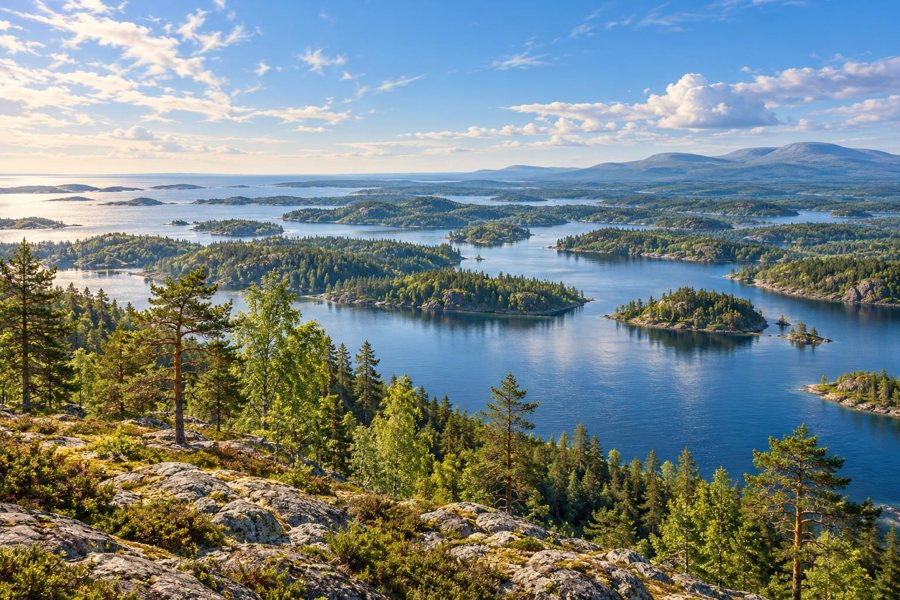 Symbolic illustration related to The geography of Finland; not a documentary view of a specific place.
Photo: AI-generated illustration (OpenAI)
Symbolic illustration related to The geography of Finland; not a documentary view of a specific place.
Photo: AI-generated illustration (OpenAI)
How the country is arranged
The south includes the capital region and a busy coastline, while central and eastern Finland are associated with lakes, forests and smaller towns. Western Finland faces the Gulf of Bothnia; the east looks toward the lake country and the Russian border. Farther north, Lapland has a more open, Arctic-influenced landscape and longer seasonal contrasts in daylight. These are broad travel regions rather than rigid boundaries, so use individual destination guides to decide where to spend time.
Begin with the regional climate guide when choosing dates and clothing. The separate guide to Finland's natural landscapes explains the mix of shore, forest and lake country. If you are building an outdoor itinerary, compare the regions covered by Finland's national parks before deciding how much time to reserve for a walk or overnight stay.
Choose a route that fits your time
For a first visit with only a few days, staying in the south and adding one nearby town usually means less time in transit. A longer trip can connect several regions, but check distances rather than assuming that destinations which look close on a small map are easy day trips. The overview of transport in Finland can help you compare rail, bus, ferry and car options; actual services depend on the places and dates you choose.
City stops offer museums, architecture and services, while lake and forest areas suit a slower pace outdoors. For a capital-area introduction, see Helsinki. To understand everyday customs that shape a stay, read about Finnish traditions and the place of the sauna.
Finland is also a country of two national languages, Finnish and Swedish; Sámi languages are used in the north. English is commonly useful in visitor-facing settings, but learning a greeting and checking place names in both local spellings can make navigation easier. For border, entry and other current travel requirements, consult the relevant official authorities before departure rather than relying on a general geography summary.
In practical terms, choose a compact base, check the onward journey, and let the season shape the balance between city visits and time outdoors. That approach makes Finland's distances and regional contrasts easier to enjoy.
