
Finnish sledge
A Finnish kick sledge is a simple way to travel short distances on firm, snowy paths: the rider stands on runners and pushes with one foot while steering with the handles. It works best where a route is prepared and the snow is compact; deep, loose snow and icy slopes make it harder to control. Before setting out, check whether sledges are available at your destination, what route is suitable and whether the ground conditions have changed.
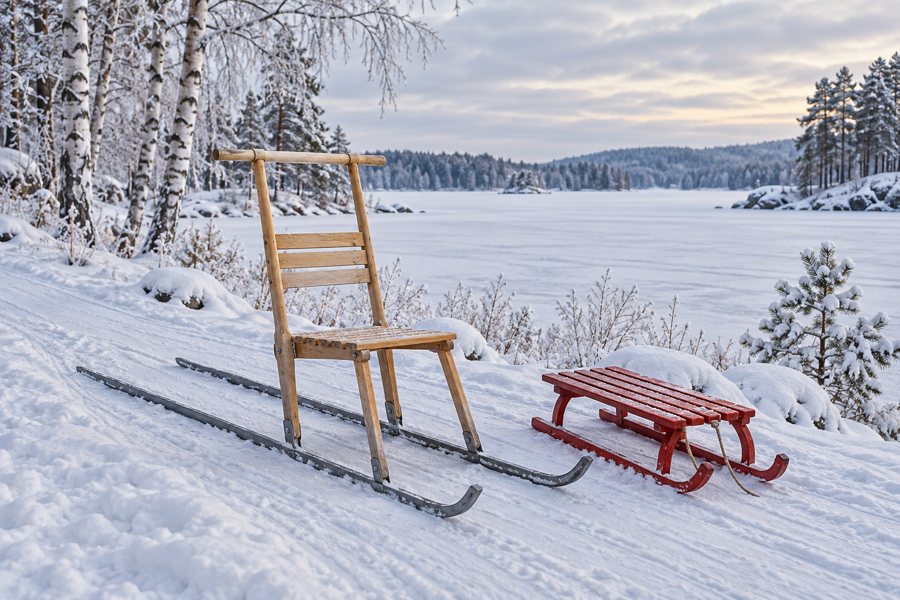 Symbolic illustration related to Finnish sledge; not a documentary view of a specific place.
Photo: AI-generated illustration (OpenAI)
Choose a suitable route
Start on a level, open path away from traffic and crowds. Practise pushing, coasting and braking in a clear area before picking up speed. Keep both hands on the handles, look ahead and leave space between other users. Avoid steep descents, road crossings and unfamiliar ice. A kick sledge is not a substitute for a child’s pram or a mobility aid unless its design and the route are explicitly suitable.
Snow and ice conditions vary, so do not assume a route is usable just because it appears on a map. Ask a local rental desk or activity host where the surface is currently maintained. For other guided winter outings, compare the winter-safari guide, reindeer safaris and dog sledding. If you prefer lifts and marked runs, read about skiing in Finland.
Balance, clothing and children
Wear shoes with grip and clothing that allows an easy step and push. Gloves help protect hands on cold handles; a helmet is sensible where there are slopes, other users or children learning. Keep scarves and loose straps clear of moving parts. Children should use a sledge only on a route matched to their ability and under close adult supervision; check the equipment size and any local rental guidance.
Agree on a stopping point before you start and do not ride faster than you can safely stop. If the path is polished, crowded or rutted, walk the sledge or choose another route. When sharing a narrow track with pedestrians, slow down and give way. Return rented equipment where instructed rather than leaving it on a path.
Fit it into a winter itinerary
A short kick-sledge outing can add movement to a day that otherwise involves sitting in transport or watching an activity. Pair it with a nearby walk or family attraction rather than planning a long journey around equipment that may not be available. The family activities guide, winter-safari overview and Lapland winter guide offer different ways to structure an outdoor day.
If Lapland is your base, compare accommodation in the region and check local transport from your chosen stay. City pages for Rovaniemi and Kemi can help when you want to combine a town visit with outdoor time. In every location, follow local signs and instructions and change plans if the surface is not safe.
Check before you go
Ask whether equipment hire includes a helmet, where it must be returned and whether the rental requires a deposit. Confirm opening times directly with the provider; they can change with conditions and season. Bring a dry layer for afterward and keep the outing short enough that younger participants stay warm. Good footing and a clear path matter more than speed.
