
Canoeing and kayaking in Finland
Explore Finland’s waterways by boat
A canoe or kayak offers a different perspective on Finland’s landscapes: shore-side forests, rocks and small islands glide by at a leisurely pace, and routes can often be planned in stages. Options range from sheltered lake coves to open stretches of the Baltic Sea. A short guided tour is a good choice for a first outing; experienced paddlers can plan longer routes with overnight stops. For a helpful overview of boat trips and other ways to explore the water, see Boat and water excursions in Finland.
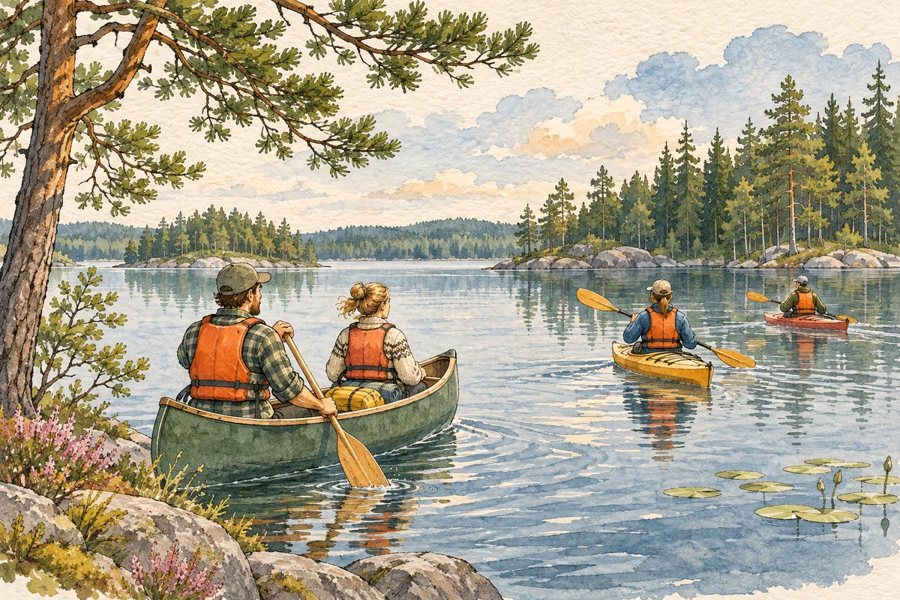 KI-generierte Illustration: Kanu und Kajaks mit Paddelnden in Schwimmwesten auf einem ruhigen Waldsee.
Photo: Max-TD / OpenAI
Lakes, archipelagos and sheltered waters
The lake district around Saimaa is an extensive network of inland waterways. In the Puumala region, local operators offer trips through sheltered coves and between islands; around Joutenvesi, the archipelago continues towards Linnansaari and Kolovesi. There, narrow passages and channels connect different bodies of water. The shoreline alternates between bare rocks, pine forests and lush islands. If you prefer to stay on land, you can complement your visit with hiking in Finland or explore larger natural areas in Finland’s national parks. In the south, the Archipelago Sea is a destination for guided sea-kayaking trips; island groups and sheltered coves offer varied perspectives, while wind and waves determine the level of challenge.
Choosing a tour to suit your experience
For beginners, a guided half-day tour is a manageable way to get started: a guide explains paddling technique, equipment and safety on the water, and chooses a route suited to the group. In the Saimaa area, these outings are available by kayak, canoe or SUP; operators list Matkolahti and Enonkoski as possible starting points. When planning your own trip, consider the distance, wind, water temperature, how the boat is loaded and the return journey together. A sheltered stretch of lake is not the same as a long crossing. Sea-kayaking experience is especially important where there are waves and open water. If you plan to travel for several days, arrange your stages, access to water and permitted overnight sites in advance, and take protected areas and seasonal restrictions into account.
Safety and respect for nature
Weather and wind help determine whether a route is suitable for the group’s abilities; having someone accompany you on the water and letting a trusted person know your route plan both improve safety. Wear a personal flotation device throughout the trip; a waterproofed phone, warm clothing, a change of clothes, food and drinking water are essential equipment. Wind can make the return journey harder, so allow plenty of time in your day’s plans. The boat should remain buoyant and level even if water gets inside; sealed storage compartments or buoyancy bags help achieve this. Local rules for landing, camping and campfires apply in protected areas. Protecting the endangered Saimaa ringed seal is especially important on Lake Saimaa; keep off islands where birds are nesting. Avoid busy shipping lanes; take all rubbish back to shore, and leave shores and islands undisturbed. A guided tour can be particularly helpful on your first day, allowing you to learn about equipment and paddling technique with support before attempting a longer, more demanding route on your own. For specific examples of calmer inland waters, see paddling trips on Lake Saimaa; coastal paddlers can find a dedicated introduction at kayak tours in the archipelago.
