
Water cruises in Finland: lakes, coast and islands
Choose a boat trip in Finland by deciding first whether you want a lake, coastal or island setting, then compare the departure point, time on the water and time available ashore. These trips are not interchangeable: a short sightseeing cruise, a transfer between destinations and a longer sailing itinerary serve different plans. Routes and operating periods vary, so confirm the current route, timetable, boarding point and ticket conditions with the operator before arranging connections.
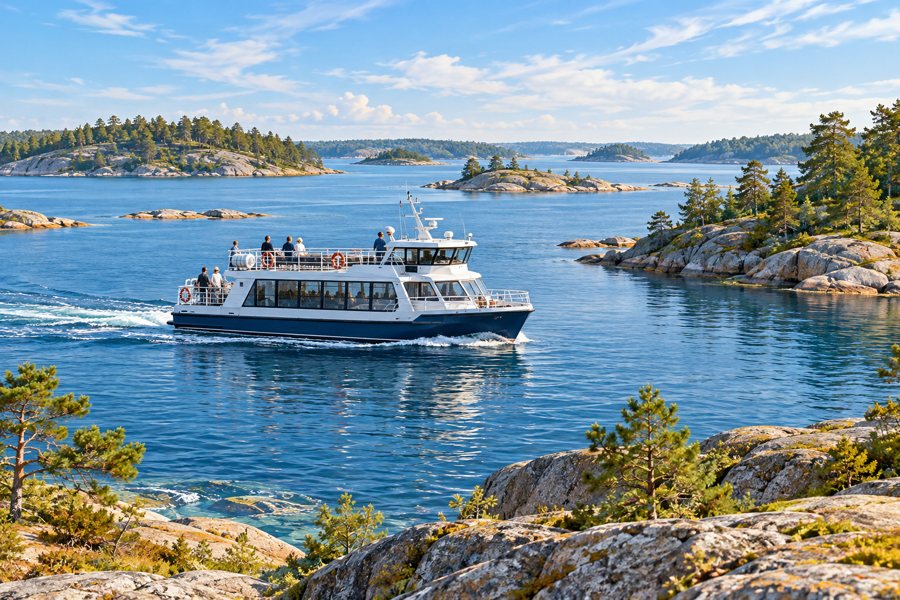 Symbolic illustration related to Water cruises in Finland; not a documentary view of a specific place.
Photo: AI-generated illustration (OpenAI)
Lake or coastal scenery?
Inland waterways and Lake Saimaa offer a different landscape from the Baltic coast and archipelagos. A trip around Savonlinna can be considered when planning around Saimaa; coastal stays may be built around Helsinki, Turku or Vaasa. Read about Finland’s regions and waterways before choosing a base, especially if you are combining the boat trip with road or rail travel.
Check what the fare includes, how early to arrive, whether luggage is practical on board and how much time you will have at each stop. If accessibility, meals or child facilities matter to your group, ask the operator rather than assuming they are available. Leave a buffer between the boat and onward transport: delays, weather and port distance can affect a tight connection.
Build a workable itinerary
Season changes daylight, weather and the range of sailings. Use the climate guide to prepare clothing, but verify the forecast close to departure. Compare the port with your chosen transport connections and decide whether you need a night nearby before or after the trip. A city stop can add context to a coastal itinerary; consider Porvoo’s riverside and coast.
For a relaxed day cruise, keep the rest of the schedule light and allow time to reach the quay. For a multi-stop journey, check each segment separately and make sure the transfer between terminals is realistic. Treat the operator’s current information as the source for departure times and availability; older descriptions are not a substitute for a live booking check.
Check the details that affect the day
Before buying a ticket, confirm whether it is tied to a particular departure, what happens if weather disrupts the trip and whether changes or refunds are possible. Ask how boarding works, whether luggage can be left safely and what facilities are available during the crossing. Travellers who need step-free access, a place to sit indoors or help boarding should confirm arrangements with the operator directly. For children, consider the length of time on board and bring suitable layers; conditions on open water can feel different from the temperature in town. Keep the operator’s contact and port address available on travel day.
Choose between a short outing and a longer route
A local sightseeing trip is easiest to plan when the quay is close to your base and you do not need a tight connection afterwards. A journey between towns needs more attention to arrival time, terminal location and what you will do with luggage during any stop. For either type, compare the actual time on board with the time ashore: a route with several calls may leave only a brief visit at each place. Select a sailing that leaves enough time for the part of the trip you care about most.
