
Antiques, Vintage and Collectors’ Markets in Finland
Finland’s markets for older goods range from seasonal street flea markets to specialised antiques fairs. An antiques shop is a permanent store offering a curated selection of older items. A vintage boutique often focuses on clothing, jewellery, design or home furnishings from particular decades. A fair, by contrast, brings together several dealers at a venue for a limited time. Distinguishing between these formats makes it easier to search specifically for furniture, design objects, fashion or collectibles.
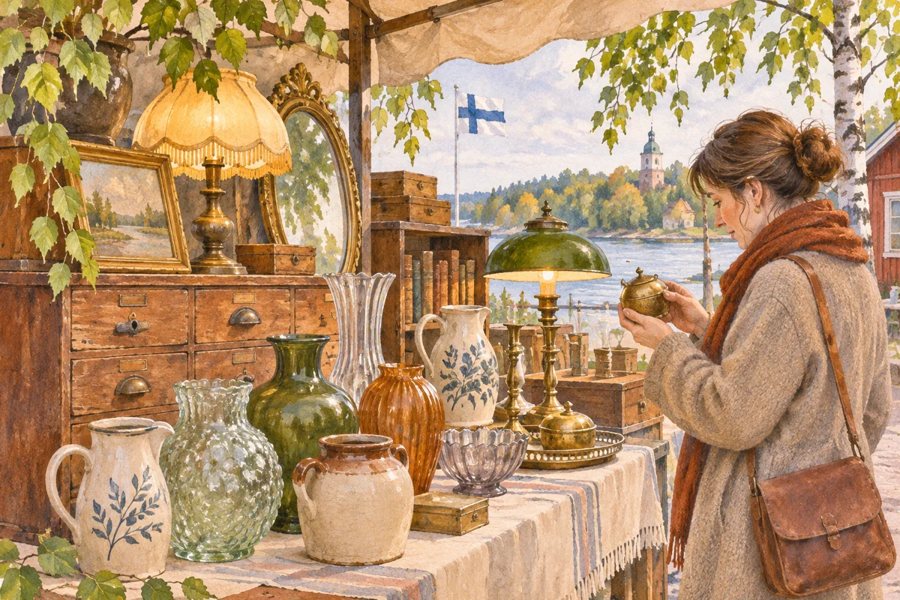 KI-generierte Illustration: Besucherin betrachtet Glas, Keramik und alte Tischlampen an einem Vintage-Stand.
Photo: Max-TD / OpenAI
Three ways to find older pieces
At an ordinary kirpputori, the Finnish word for a flea market, goods often come from private individuals. At self-service shops, sellers rent a table or shelf, and the selection of clothes, crockery, books and everyday items changes regularly. A street flea market works in much the same way, but takes place outdoors and is often tied to a season or event. Hietsu in Helsinki is a well-known example: in summer, the flea market occupies the square by Hietalahti Market and is known for second-hand goods and Finnish vintage design.
A permanent shop is Fasaani Antik & Helsinki Secondhand in Helsinki’s Ullanlinna district. This antiques and vintage buying and selling business offers furniture and smaller items in a basement shop of almost 1,000 square metres. Those looking for furnishings as well as smaller finds can browse both categories at a permanent retail location. Antiques and vintage shops place greater emphasis on curation and organisation, focusing on particular styles, periods or types of goods. These permanent addresses are suitable when you want a targeted selection; at a self-service flea market, the search is more open-ended and the stock less predictable. Mixed second-hand goods and self-service stalls are characteristic of flea markets and second-hand shops.
Fairs for antiques, design and collectors
An antiques fair is not a permanently open shop. It takes place on a set date and brings together several dealers with a broader selection, such as furniture, glass, art, vintage fashion and design. One specific example is Helsinki Antiques: the event held on 7–8 November 2026 took place at Wanha Satama. Around 40 dealers offered antiques, vintage items, design and art. This distinguishes the fair from a permanently open shop: several dealers presented their selections at a set time in an event venue.
In Helsinki, you can combine a visit to antiques and design shops with a stroll around the city. For food and permanent market stalls, the Old Market Hall and Kauppatori offer a different focus: the emphasis there is on vendors, delicatessen and the market atmosphere rather than collectibles.
Helsinki, Hietalahti and Wanha Satama
Helsinki offers different formats within easy reach of the city centre: Hietsu is a seasonal outdoor flea market, antiques and vintage shops are permanent retail locations, and Helsinki Antiques is a fair with a changing range of exhibitors. Hietalahti is also home to a market hall in an Art Nouveau building dating from 1903. Over the course of its history, it has been used, among other things, for the antiques trade, and today it houses a variety of food businesses. A visit to the square can therefore be combined with a look at its architecture and market history. Fresh food and permanent market stalls can be found at weekly markets and food markets.
Vintage in Tampere and other cities
Tampere has curated boutiques selling clothing from earlier decades, as well as specialist shops for vintage watches and jewellery. Those looking for household goods or a mix of second-hand items can also find traditional self-service markets. This distinction is useful: a specialist shop is often a more direct option when looking for a particular item of clothing or design object, while flea markets are well suited to browsing. Market halls are centrally located outside Helsinki, too: the hall in Turku dates from 1896, the market hall in Kuopio is located at Kauppatori, and in Oulu the old warehouses stand beside the market square.
What collectors look for
When buying second-hand goods, it helps to know the exact measurements, have a clear idea of what you are looking for, and check the material and condition. For design items, porcelain, glass or watches, maker’s marks and condition are important clues; with antiques, provenance and condition help determine what an item is. Fairs may offer more variety, while specialist shops often cover a narrower category of goods. Contemporary Finnish design and souvenirs are part of the shopping scene in Finland.
Frequently asked questions about antiques and vintage
What is the difference between vintage and antiques?
Vintage usually refers to older clothing, furniture or design objects selected for their style and period. The antiques trade focuses more on older works of art and useful objects, as well as collectibles.
Is a flea market the same as an antiques fair?
No. A flea market mainly offers used everyday goods and stalls run by private sellers. An antiques fair brings specialist dealers and selected older objects together at a venue.
Where is Helsinki Antiques held?
The event held on 7–8 November 2026 took place at Wanha Satama. It is a fair, not a permanently open shop.
