
National parks in Eastern Finland: trails and trip bases
Eastern Finland is best planned around a chosen base and the kind of lake-and-forest outing you want. Rather than trying to cover several distant parks in one day, decide whether the trip is a short walk between town visits, a full day on a trail, or a stay focused on nature. Then compare park access and trail conditions with your accommodation and transport plans.
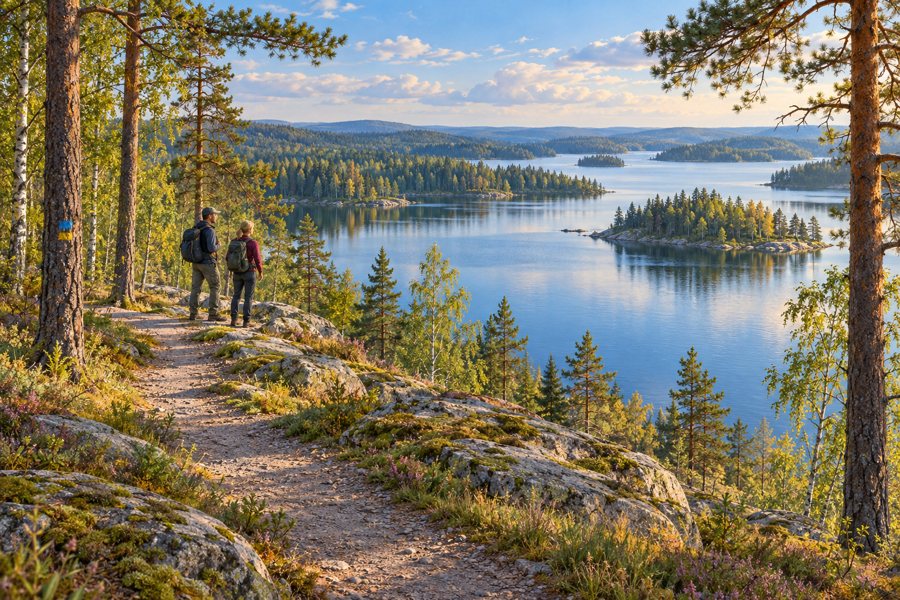 Symbolic illustration related to National parks in Eastern Finland; not a documentary view of a specific place.
Photo: AI-generated illustration (OpenAI)
Use a town as your starting point
Kuopio, Joensuu, Mikkeli and Savonlinna can each anchor a different part of a wider eastern-Finland itinerary. They are useful planning bases, not substitutes for checking the exact park entrance: a trailhead may be some distance from the centre and public transport may not serve it at the time you need. Start with the guides to Kuopio, Joensuu, Mikkeli and Savonlinna, then map the route to the specific park access point.
Compare Eastern Finland with the broader guide to national parks in Finland and the regional overviews for Lapland, Southern Finland and Western Finland. For landscape context before choosing a walk, see the overview of Finland’s nature.
Pick a route that fits the day
For a first visit, a signed short loop or an out-and-back path is easier to manage than a point-to-point walk that depends on a pickup. Check distance, estimated walking time, surface, elevation, rest places and the location of the start. Lakeside terrain can include rocks, roots, mud, boardwalks or uneven shorelines; do not infer accessibility from a route name or a short distance. If anyone in your group has mobility needs, confirm details for the specific trail and facilities before leaving.
If you plan a longer walk, set a turnaround time and allow for breaks and the return journey. Bring water, food and weather-appropriate layers. Download a map and the route to the trailhead in advance; coverage can be inconsistent away from settlements. If the walk is remote, share your plan and expected return time with someone.
Check current conditions
- Look for trail closures, maintenance notices and access changes.
- Check travel time and transport back from the trailhead.
- Confirm which toilets, shelters or visitor facilities are open and where they are located.
- Follow local instructions for fires, overnight stays, dogs and protected areas.
Weather, water levels and maintenance can change the experience. Verify current information for the exact route shortly before departure and keep a shorter alternative in mind. Stay on marked trails where directed, take rubbish with you and leave wildlife undisturbed. This makes a park visit easier to adapt without turning the day into a rushed drive between far-apart stops.
