
Finnish cuisine
Finnish food is shaped by forests, lakes, farmland and a long northern growing season. A visitor can start with rye bread, potatoes, fish, berries and dairy, then look for regional dishes rather than expecting one national menu. Restaurant menus change with season and place; asking what is local today is often the easiest way to try something distinctive.
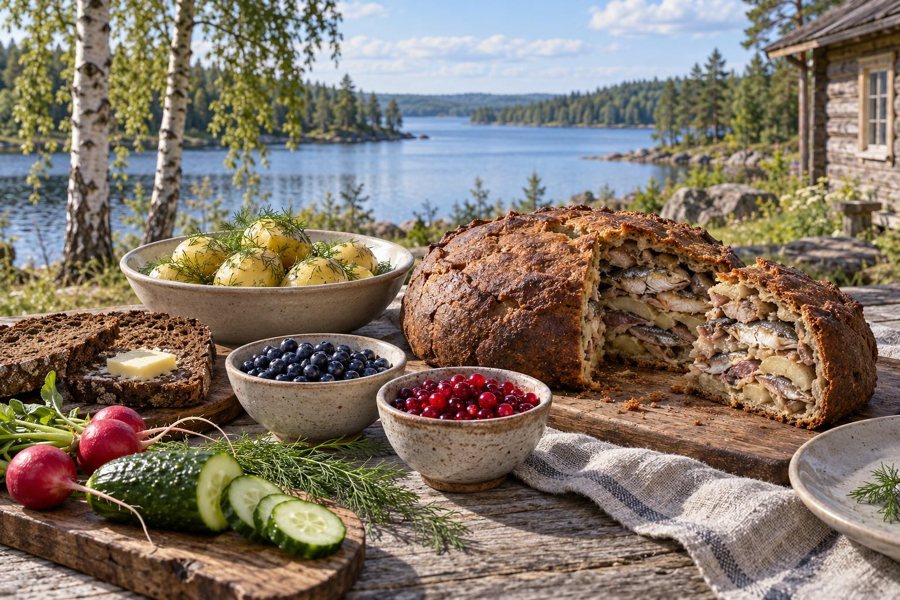 Symbolic illustration related to Finnish cuisine; not a documentary view of a specific place.
Photo: AI-generated illustration (OpenAI)
Ingredients and familiar dishes
Rye bread is a common part of meals, while potatoes, oats and other grains appear in everyday cooking. Fish from coastal and lake regions is prepared in many ways; salmon soup is a comforting option often found on menus. In eastern Finland, Karelian pasties—thin rye-crust pastries traditionally filled with rice porridge or other fillings—are a well-known snack. They are often served with egg butter, though recipes vary.
For a heartier meal, look for casseroles, soups and oven-baked dishes that suit colder weather. Meat dishes and fish pies have regional versions, so a dish’s name may not guarantee a single recipe. Berries such as lingonberries, bilberries and cloudberries are used in desserts, preserves and sauces. In late summer and autumn, menus may feature seasonal mushrooms and berries, but availability depends on the year and the restaurant.
Finnish cuisine is not limited to traditional food. Cities offer international restaurants, cafés, bakeries and casual lunch places, making it easy to compare styles. In Helsinki, a visitor can combine a meal with museums and waterfront walks; Turku offers a different setting along the river, while Tampere is a useful stop between lakeside sights.
Choosing food around the seasons
Cold-weather menus tend to include warming soups and baked dishes. During brighter months, outdoor cafés and market stalls make a meal part of a city walk, and local produce becomes more visible. These are broad patterns, not a promise that a particular ingredient will be available on a specific date. Check a current menu if you are planning around a dietary need.
Market halls and food markets are good places to see everyday ingredients and pick up a snack. Ask vendors how a product is eaten, especially if its Finnish name is unfamiliar. Cafés are also a simple way to try local pastries alongside coffee. If you have allergies, communicate them clearly and confirm ingredients with staff; do not rely on a dish name alone. Vegetarian and other dietary options vary between venues.
Planning a food-focused visit
Use food as one part of a regional itinerary. A coastal route can pair meals with the old streets of Porvoo or the maritime character of Rauma. In the lake district, explore Savonlinna or Mikkeli and look for fish and berry dishes on local menus. For background on seasonal conditions, see the guide to Finland’s climate; the wider traditions guide adds cultural context.
There is no need to sample everything in one meal. Choose one familiar ingredient and one unfamiliar dish, ask about the preparation, and leave room to adapt to what is actually on the menu. That approach makes Finnish food easier to explore without turning regional cooking into a fixed checklist.
